
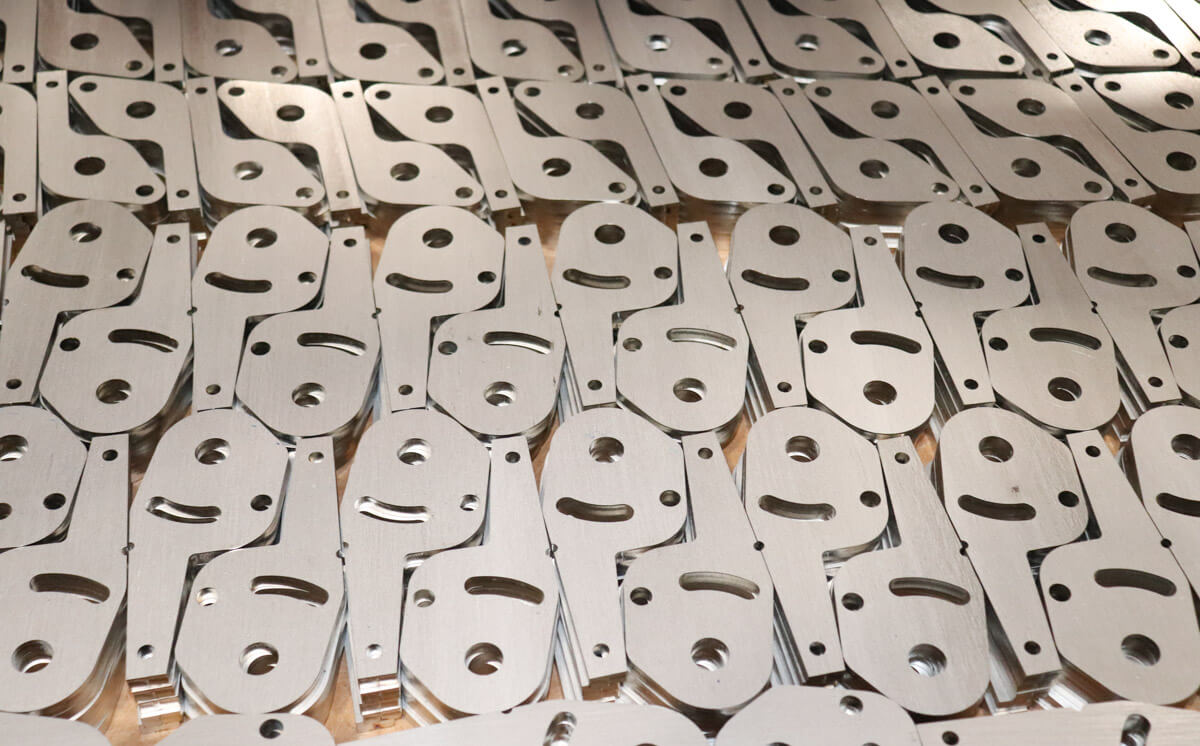
Metal fabrication is a vital component in manufacturing sheet metal for a wide range of industries. The three main metal fabrication tools, waterjets, plasma tables, and laser-cutting, are ideal for cutting thin to thick metals to use for structural components and more. At Edge Metalworks, we strive to give customers consistent, efficiently made laser-cut parts exactly to their specifications. You may be wondering when laser-cutting or another metal fabrication tool is ideal for you. Here, we’ve explained the benefits of each tool to help you decide which is the best metal fabrication tool for your project.
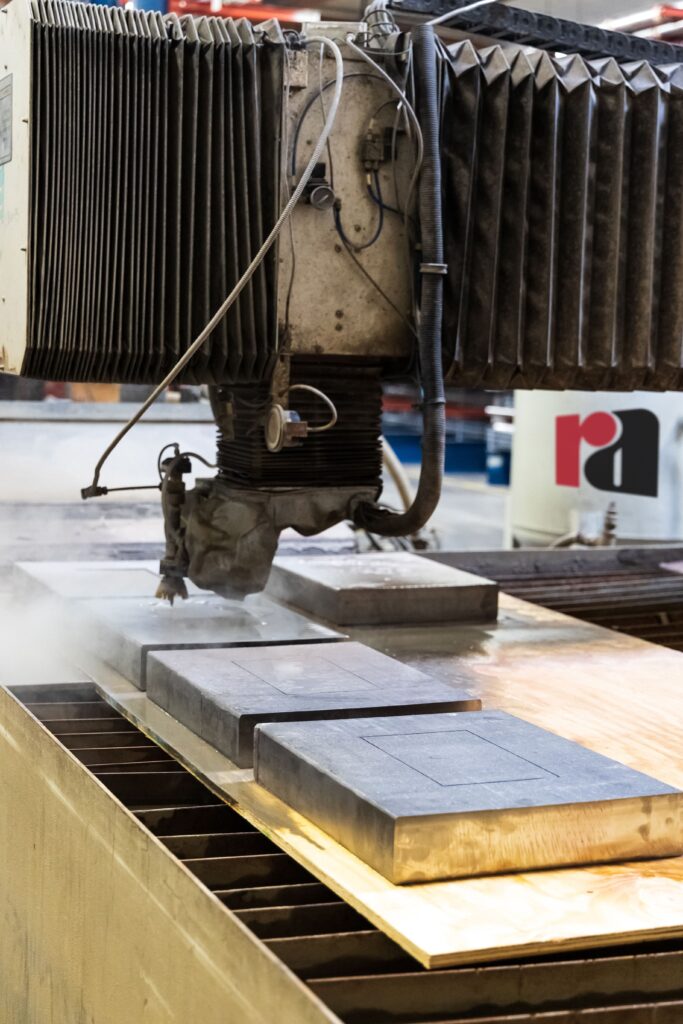
What are Waterjets?
Waterjets cut metal using a high-pressure stream of water mixed with an abrasive substance, usually garnet. The water is pushed through a small nozzle, providing high flow velocity to cut materials easily. Waterjets can cut nearly any material, even heat-sensitive ones. The water in this tool is warmer than room temperature, but not hot enough to cause a heat-affected zone in the finished products.
Benefits of Waterjets
Waterjet fabrication is a cold cutting process, meaning there is no thermal distortion when cutting, which is ideal for more sensitive materials. Waterjets are precise and offer high-quality, fully square edges for finished parts. It is also versatile, as it can cut a wide range of materials, including non-metal ones. However, waterjets have slower cutting speeds, high energy and water consumption, and high maintenance requirements, which lead to higher operating costs. These drawbacks drive up production costs, making waterjets most effective when you need to cut a wide range of materials or heavier plate steel.
What are Plasma Tables?
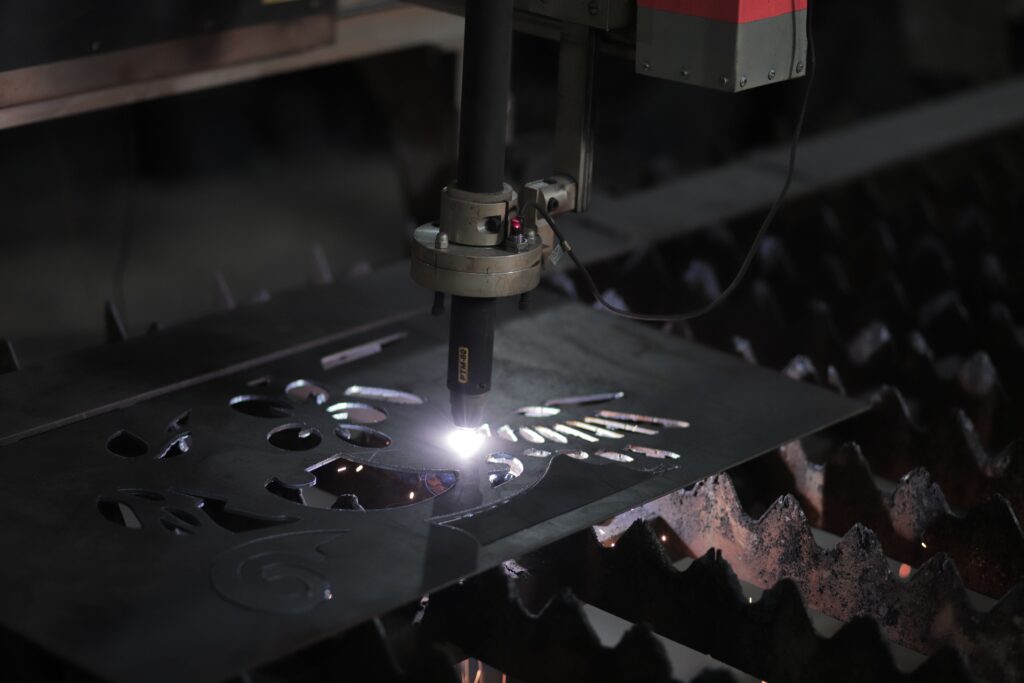
Plasma tables cut metal with an electric arc and compressed gas blown through a nozzle at high speeds. They operate by forcing gas through the nozzle of a torch, which has a negative electrode that creates a circuit when turned on and placed on the metal. The heat from the circuit heats the gas until it becomes plasma to melt the metal. This fabrication tool melts thick, conductive metals like steel and aluminum. To cut with a plasma table, metals should be at least ½ inch thick to be cost-effective.
Benefits of Plasma Tables
Plasma tables are one of the most cost-effective metal fabrication methods. They are the most affordable option, but they’re not as accurate and will require more finishing. It is also restricted to conductive materials only, since it uses an electric circuit to create the plasma arc. Also, as the plate gets thicker, the cut edge begins to bevel significantly, requiring additional finishing. Then the significant heat generated by the plasma torch causes a hardening effect on the cut edge of the material and can warp thinner-gauge metal. These heat-damaged areas will add extra steps and costs to the final product. The machine itself also produces more heat, fumes, and noise, which require safety precautions in the shop. If using a plasma table, we recommend sticking to cutting heavy, thicker metal plates.
What is Laser-Cutting?
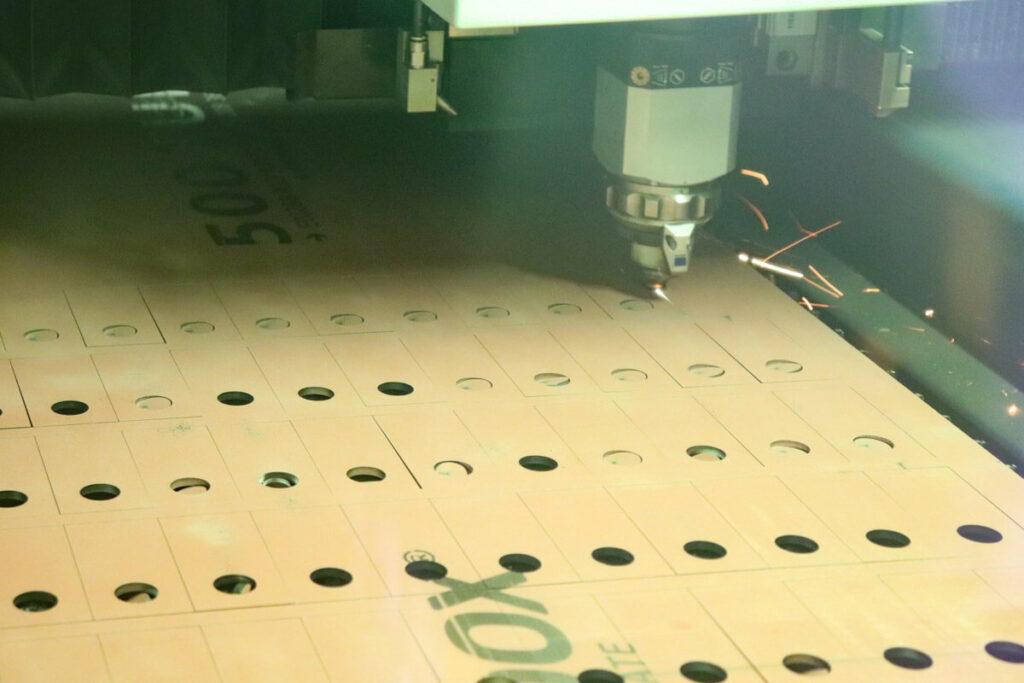
Laser-cutting uses a focused beam of light to melt or evaporate metal to cut it. They are controlled by our CAD software to give very precise finished products, which is great for repeat jobs. This method is best for metals of thin to medium thickness; our shop can cut sheet metal up to one inch thick. It also uses less energy to cut aluminum and steel due to the thin cut kerf. Learn more about the sheet metal we cut on our Sheet Metal Available at Edge Metalworks page.
Benefits of Laser-Cutting
Laser-cutting is more precise than plasma tables and waterjets, making it perfect for intricate and smaller designs. They can create complex designs at high speeds and tight tolerances to give the cleanest results. Many laser-cut parts will have burr-free edges that reduce the need for extra finishing. With high cut speeds, we can turn out high-quality parts faster and more cost-effectively. Also, with the clean and precise cut, it requires less finishing when preparing for welding or assembly. Laser-cutting can release toxic fumes, but fiber lasers emit less than other methods, and our lasers have built-in air handling systems to clean the air before it is released into the shop.
Laser-Cutting with Edge Metalworks
Choosing the right metal fabrication tools depends on your production needs, precision needs, materials, and budget. We recommend choosing plasma tables for heavy plates, laser-cutting for precision, and waterjets for versatility. At Edge Metalworks, we provide high-quality, precise laser-cut parts for multiple industries. We ensure a customized and personal experience when working with us to give you the exact finished products you need. If you’re ready to get started, contact us today.